Week 9 - One Step Forward One Step Back

This week, I focused on getting the wiring and a cardboard mold finished. After troubleshooting and refining the circuit, I successfully got the components functioning as intended. I then began preparing the physical form by creating a cardboard mold to test how the sharpener might be housed. However, during this phase, the circuit disconnected, forcing me to rewire the setup—another setback. Despite this, some of my readings this week and my experience with dealing with the problem helped me think more critically about how form and function work in tandem.
So we're in week 9 and as discussed last week. I NEED this mold done or I might explode. I'm super busy this week with my final Finance Exam next Tuesday (weirdly early) and an economics presentation on Thursday. Despite this I'm determined to get this done so I can focus on the fun part - 3D printing.
The Crit was a little disappointing given I hadn't progressed as much as I'd hoped. Raj and Luke both encouraged me to lessen the scope of the semester and focus on getting this model done of the sharpener. I think at this point if I can finish that I'll be pretty happy.
Therefore as soon as I could I got into the Design lab where I got to work with Steve, and we re-soldered the PCB (the board connecting all the wires).
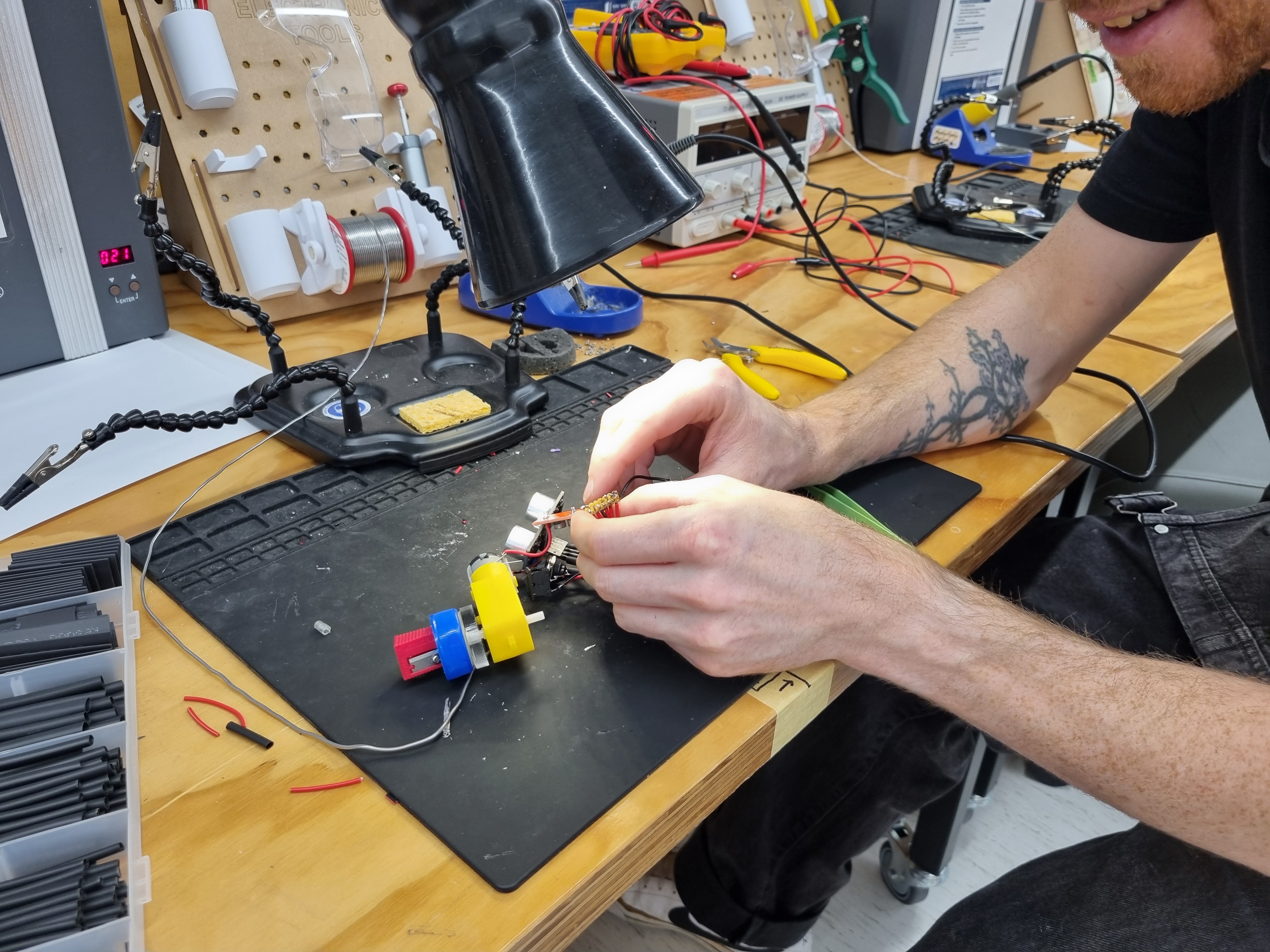
We also put some heat shrink on the wires that are close together, to prevent any unwanted wires touching each other and shorting the circuit.
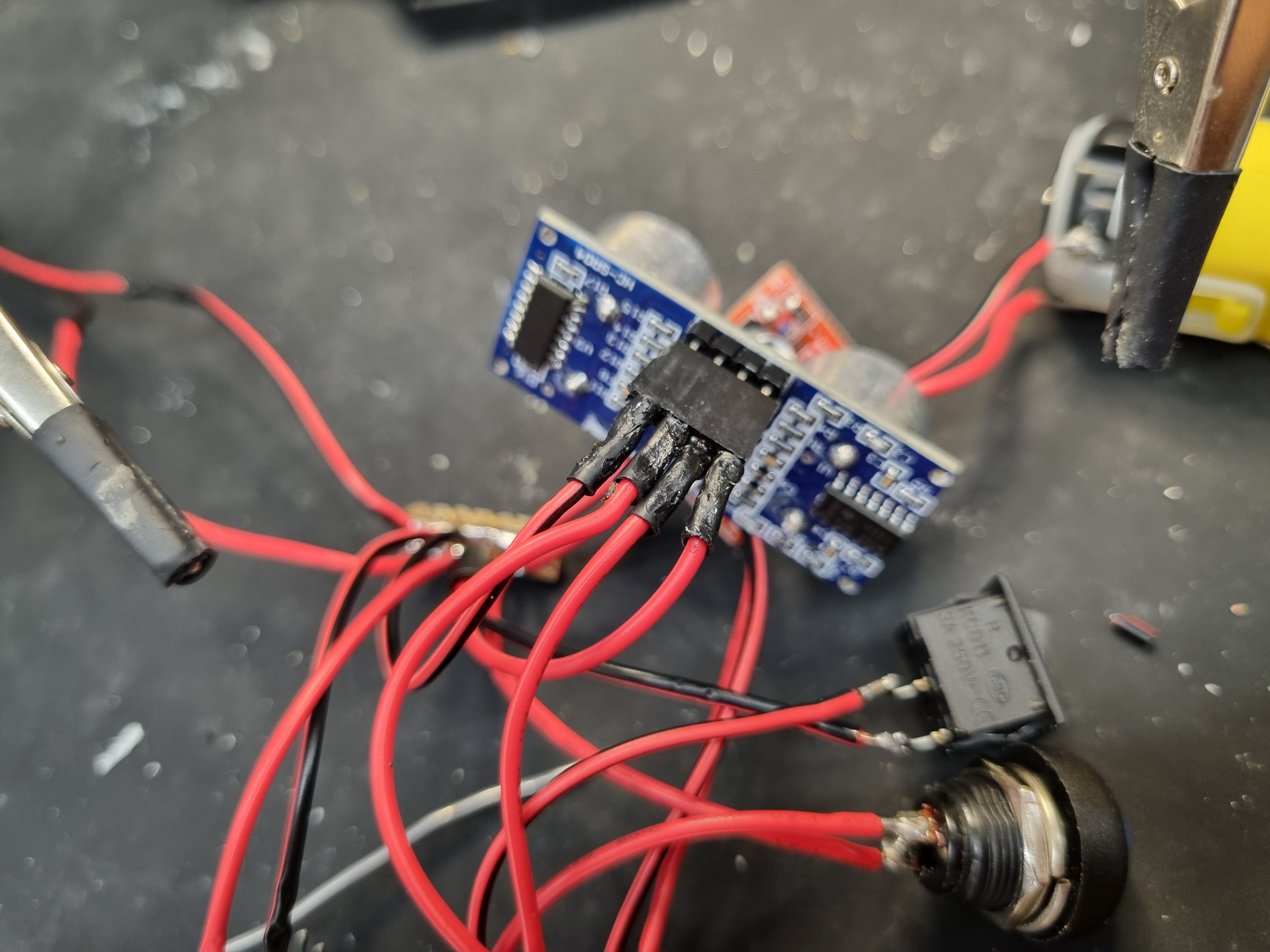
It was great watching Steve resolder the PCB, proving that this process didn't in fact take 2 hours but could be done in 30 mins or so. I picked up quite a few new hacks to complete certain connections faster and just small things like using tweezers on the wires which helped make things more comfortable and efficient.
However, once we finished, low and behold the circuit worked. Watching the Arduino light up was such an awesome feeling as I knew it meant the end of this headache... We'll be coming back to this.
Anyway I finally had some wiring that worked so it's time to get to building a phyiscal model. As previously mentioned I will start this process with a cardboard mold, hopefully learn a bit, then model something up and print it.
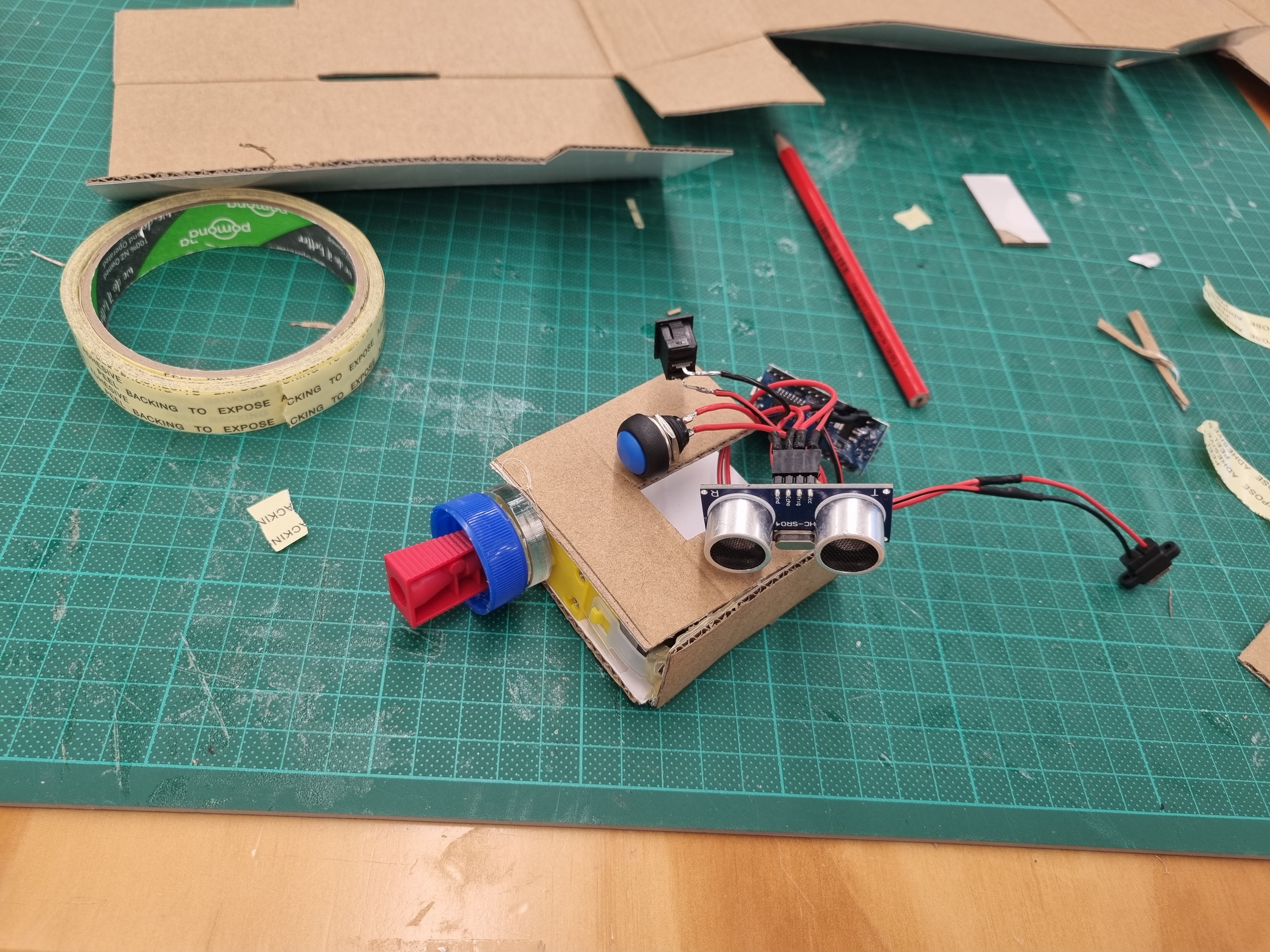
I started by measuring out all the components and cutting out some scrap cardboard. I decided to make it pretty simple and boxy for now, just so I can fit all of the wiring and components without too much hastle.
I have to say this process was much more enjoyable. Given cardboard prototyping is something I'm much more familiar with it was nice having some time building again without much use of brain power.
Finally I finished a pretty basic inner mold of the sharpener as seen below.
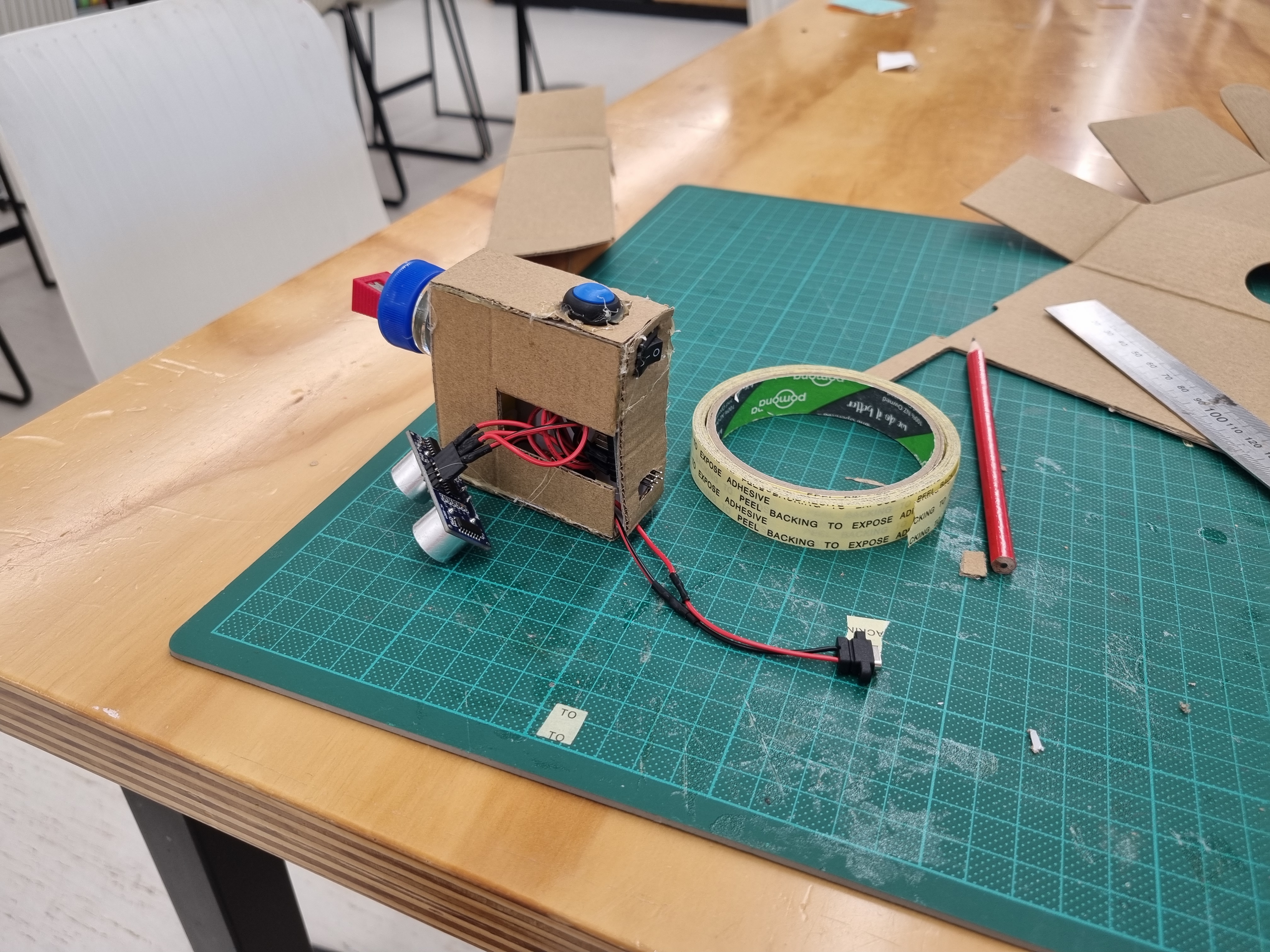
I was pretty happy overall with how it fit and its look. From here I would put one more layer over the top which hides the sharpener and creates a space below it where the shavings could fall into.
Now that the buttons are in place I thought I'd plug it in and give it a go...
It didn't work.
I don't think I've let out a bigger sigh in my life than that moment. It did however teach me that making these molds detachable in a certain way so that I could get in and change the wiring was a big must-have when it came to electronics in models.
So I got to work trying to figure out what was wrong with the wiring, using the tool I mentioned in my post last week to test that current was flowing at different points in the circuit. I then found that some of the copper track on the PCB was broken, separating the circuit. It turns out trying to stuff all of the wiring into the physical mold (see through the gap above) without much care doesn't turn out so good when it plugs in.
My plan now was to start over by getting this circuit working, then take a more structured approach to fitting all of the wiring into the mold so nothing pulled or pushed at each other. I however really didn't want to re-solder another PCB so I talked to Jamie from the Design lab who recommended putting a resistance wire along the track and soldering it to re-connect all these components.
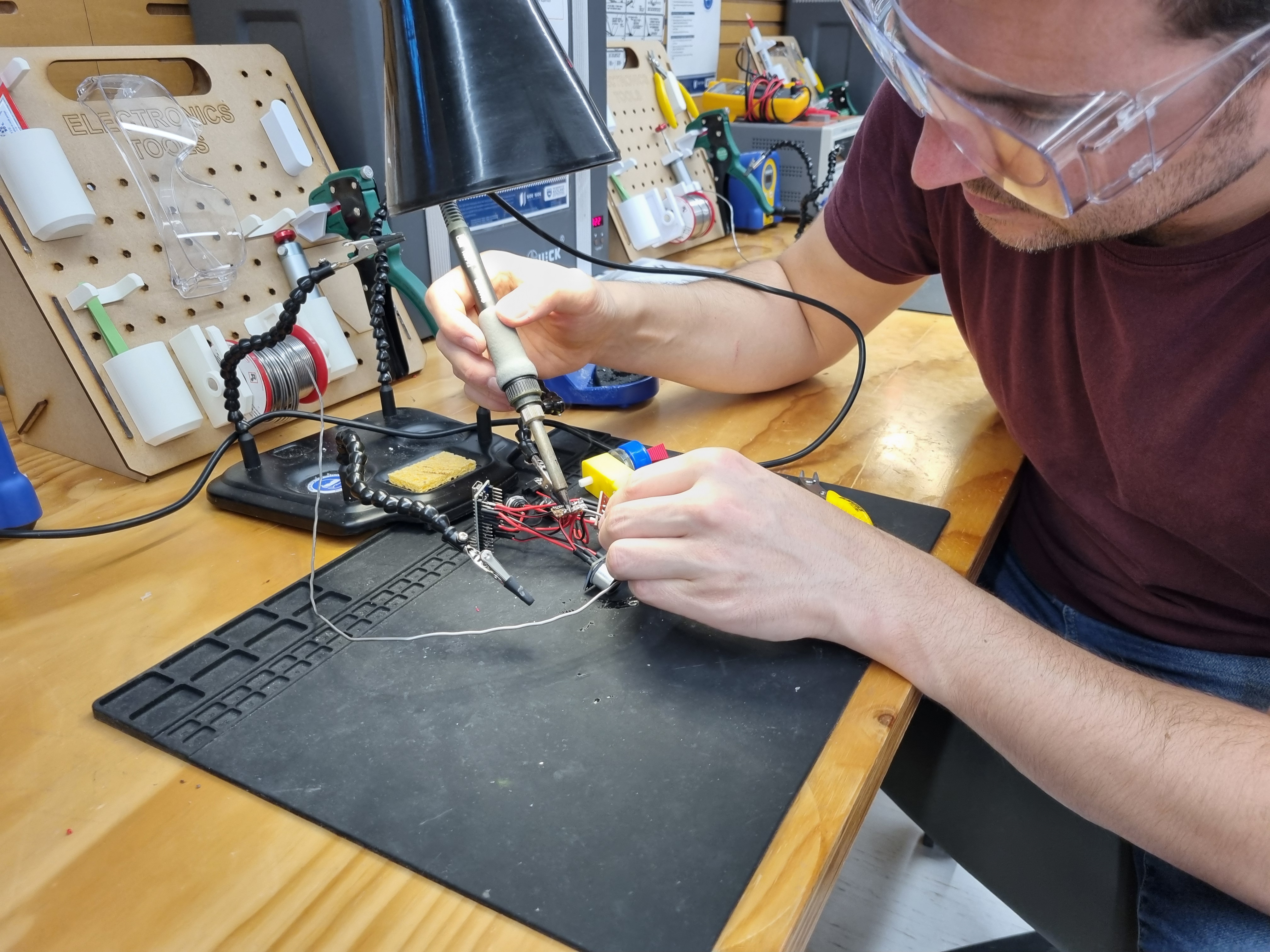
We were able to solder this back and the circuit actually worked pretty well again.
I'm super happy that the circuit is now back to where it was, however I've run out of time to finish even a cardboard mold this week. It's going to take a pretty big week next week I think if I want a chance at getting this finished, however is doable with my Finance course finishing on Tuesday.
This week has definitely tested my patience again. After finally getting the wiring to work—which has taken way longer than I’d hoped—I felt like I was finally making some solid progress. But its incredibly frustrating watching that progress unravel, especially since I was hoping to have a physical prototype done by the end of the week. Instead, I’m left with half a mold, loose wires, and the feeling that I’ve just gone in circles.
It’s really not been great timing for this trend where every step forward seems to come with two steps back, late in the semester when deadlines are starting to stack up. I know this is part of the process, and I’m still learning a lot—especially about how fragile these kinds of setups can be when you introduce form as well as function—but it’s hard not to feel like I’m falling behind.
Because of the difficulty I'm having with this, my goal is to make sure I make a physical model where the wiring is clear and functional. Whether this is through a cardboard model, or 3D printing a mold I think both will be great successes in my learning.
This week highlighted again the reality of iteration as a really unpredictable process. While I thought this process would move smoothly from circuit building into the form development unfortunately not everything has gone to plan at all the last couple weeks. I did some research into reflective practice this week for a bit of motivation and according to the iterative design cycle, setbacks like these are not just common—they're essential.
Each breakdown in the process created an opportunity for me to reassess how components were connected, how the form interacts with the electronics, and how I could make the system more robust, this cycle of building, failing, and rebuilding aligns with Donald Schön’s concept of “reflection-in-action" which I looked at this week.
His philosophy looked at constantly responding to the issues that arise in real time, adapting both problem-solving and expectations as you work. The failure of the circuit from a disconnected wire made me rethink how I design the molds around fragile electronics and highlighted my need to improve my wiring solutions (like soldering).
After another stagnant week, I'm going to ensure I put in enough time over the next week to have a full functioning cardboard model. I've been quite busy with other courses over the past few weeks with my final exam and assignments in commerce however in my last couple of weeks through week 11 and week 12 I will make sure I put in some extra effort to make up for lost time. Currently my final goal is still to have a mold 3D printed.