Week 4 - First Prototyping Experiment
This week, my focus was on planning and outlining my first structured experiment. I decided my focus would be on experimenting with electronics as a foundational step toward better designs and proofs of concept. Rather than diving straight into a polished outcome, I approached this experiment as a way to learn the basics of circuitry through hands-on making. This way I could continue to practice my physical model making through solving how I could achieve both electrical function and practical form. Throughout the week, I created a full experiment plan, and began to build a few simple circuits to get a better idea of how different components interacted. My primary goal was to gain some initial confidence with basic electronics before our practice crit session on Thursday.
This week, I began planning and executing my first experiment: exploring basic electronics through hands-on circuit building. My primary goal was to become more familiar with electrical components and how they function together, specifically focusing on simple circuits through lighting up LEDs this week. I aimed to understand the fundamental principles behind circuits to support more complex interactive elements involving arduinos in future prototypes.
During the Week 4 critique, I received feedback encouraging me to explore technical foundations early to support experimentation with responsive design. While my tutor and classmates highlighted the importance of learning through doing, we agreed that through the first week, focusing on some basic YouTube tutorials would be useful before touching any circuits.
My planning process involved identifying the focus of my experiment, some methods and processes, how I will structure it, some objectives of the experiment, and some potential challenges. I sketched out a simple plan for two circuits—one with a single LED and one with multiple in series—to observe differences in brightness and power distribution. I photographed each stage of the setup to track the evolution of the circuit. The week was focused on trial and error, and I made small adjustments along the way to fix polarity issues and incorrect resistor placement.
Focus:
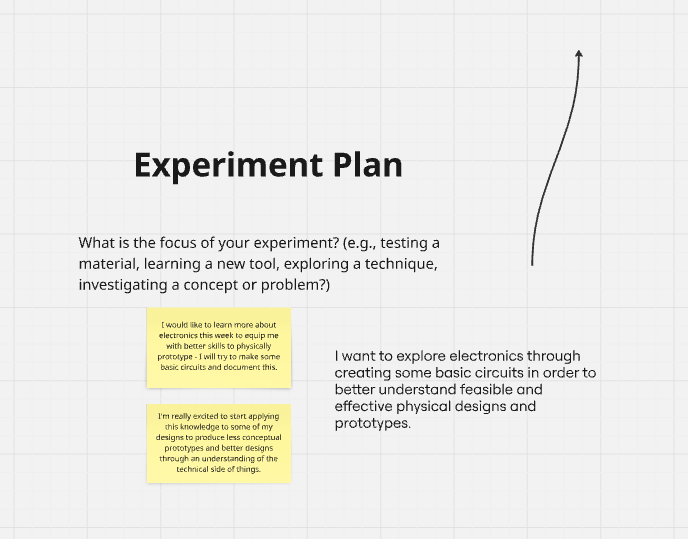
I began by looking at the focus of my experiment using the Experiment Planning Guide. I wanted to learn more about electronics to advance my skills as a physical model maker, and better prove different concepts. This led me to the creation of my focus statement:
"I want to explore electronics through creating basic circuits in order to better understand the balance between feasible and effective physical designs"
Methods and Processes:
Next I wanted to look at some methods and processes to find the best pathway to learning more about my topic. After some deliberation with peers and tutors I decided the best way was to start by watching a Beginner Electronics series a found on YouTube by CodenMore, then moving into some basic circuits in the Design Lab before the practice crit in week 5.
Youtube Series:
https://www.youtube.com/playlist?list=PLah6faXAgguOeMUIxS22ZU4w5nDvCl5gs
Structure:
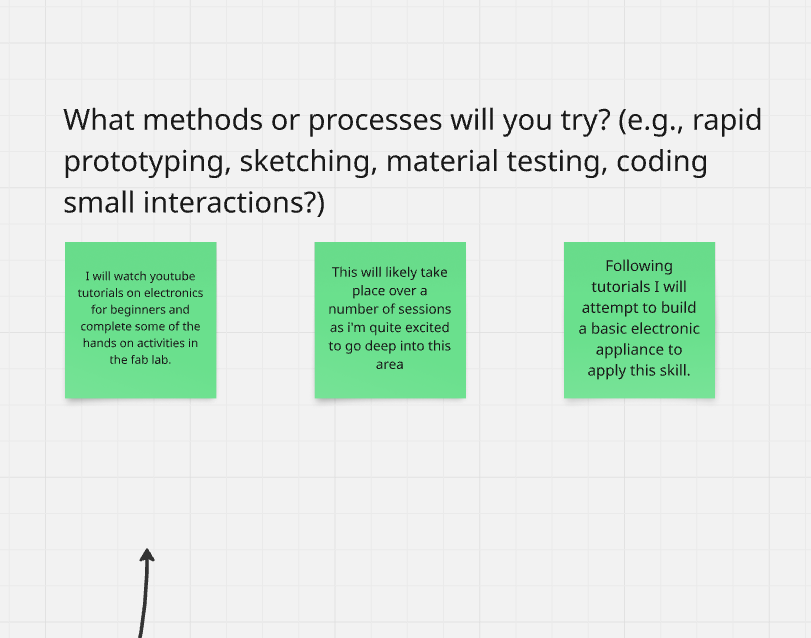
For the structure I felt that iterative trials were most effective as putting circuits together will help put the theory to work and teach me a number of skills in the process (soldering, laser cutting etc.).
Objectives:
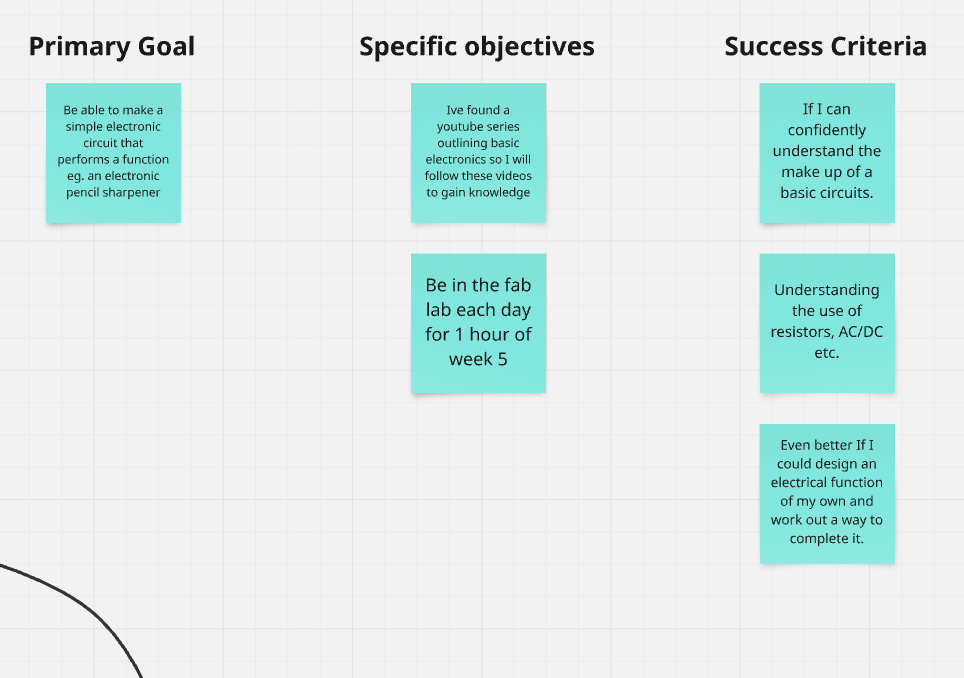
Next I created some objectives and criteria that would guide my experiment. Because I want to continue this journey over a number of weeks, my primary goal at least before the official crit in week 6 is to get a simple electronic design functioning. I decided this would be an electronic pencil sharpener as it would force me to build a basic body for it to be handled aswell. I will focus on this next week. My main success criteria is to start designing electrical functions I've created myself, and to do this I believe I need to be in the Design Lab every day to continuously practice these processes.
Challenges:
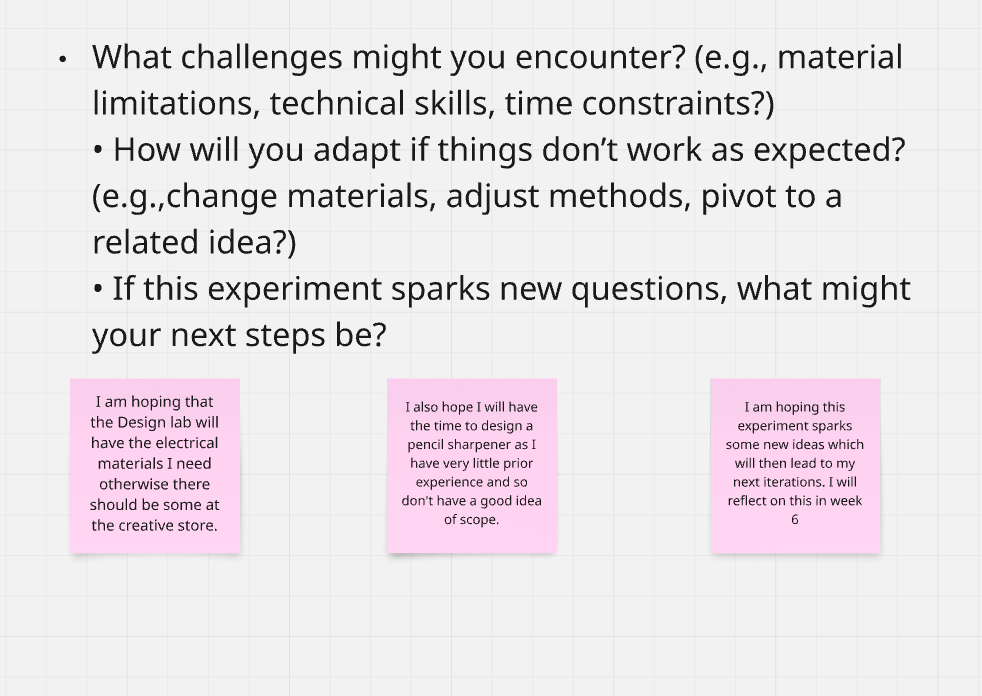
Finally, a few challenges I found may arise is firstly the range of electronic equipment that is available at the Design Lab, as this may limit some of my experiments.
Secondly, knowing the scope of these experiments may be difficult as I have very little prior knowledge of this field.
Finally, my plan for future experiments in this field is hoping that new ideas for experiments will arise as my expertise in this field gets larger and I get a better understanding of useful pathways in this field.
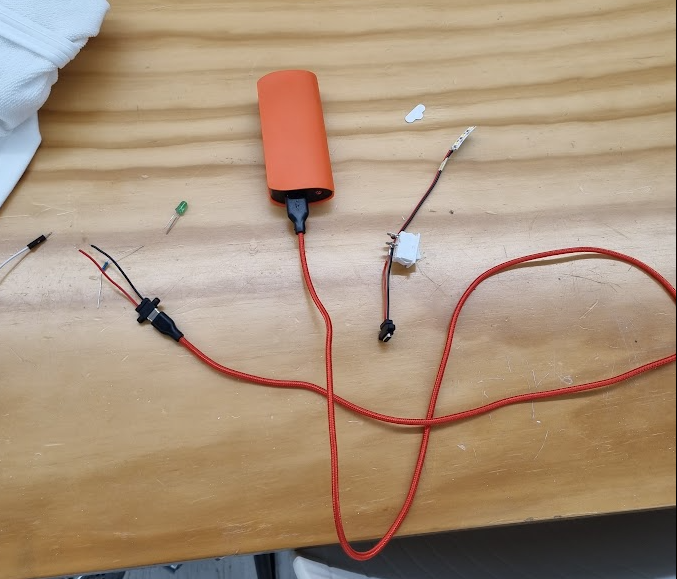
After watching a few videos in the Beginner Electronics series I felt I understood a few of the basics and was ready to make my first circuit. I wanted to simply light up an LED, and play around with a few components in the Design Lab.
These were a few of the components I used. For the power I used a USB-C battery pack, some wires, a resistor and a switch. I also played around with some different LED's.
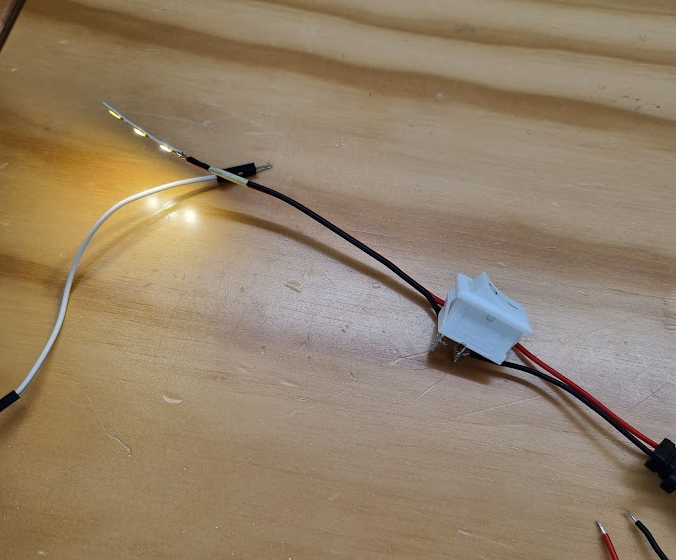
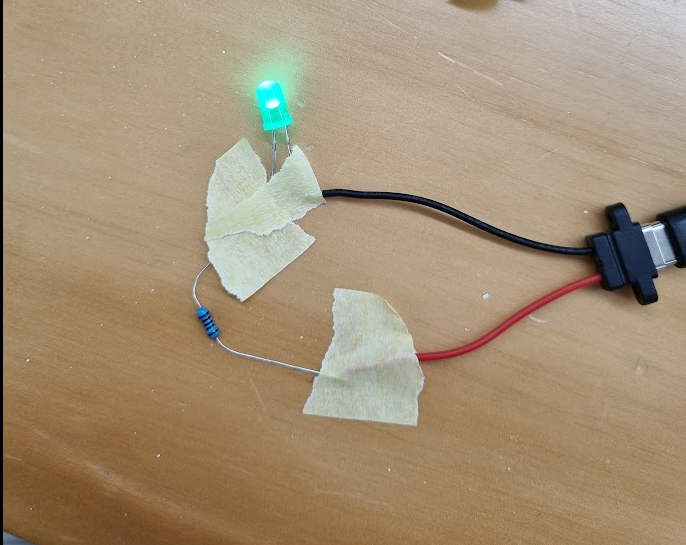
The main thing I aimed to achieve this week was foundational confidence with electronics, which I believe I succeeded in. I was initially intimidated by the technical nature of electronics, but breaking it down into small tasks made it more manageable. Seeing the LED light up for the first time was super satisfying as there's always that anxiety that the theory isn't going to work. As seen above I also taped the different components together as I do not have experience in soldering just yet. This is definitely something I can look at next week when making the pencil sharpener. I believe progressing in this manner so I keep getting small wins will be essential in my progress and motivation.
The critique feedback influenced my process by reminding me not to overthink the outcome and instead focus on learning through iteration. That mindset shift allowed me to enjoy the process more, and it helped me avoid getting frustrated when things didn’t work right away. I think a place I saw the value of practical iteration is that I found a number of skills I will need to learn over the coming weeks from trying to make this small circuit. This will include soldering, laser cutting, and maybe even 3D printing in order to create molds my electronics can fit into.
This experiment was grounded in basic electronics knowledge, which I accessed through the Electronics Basics series and diagrams explaining current flow, voltage, and resistance.
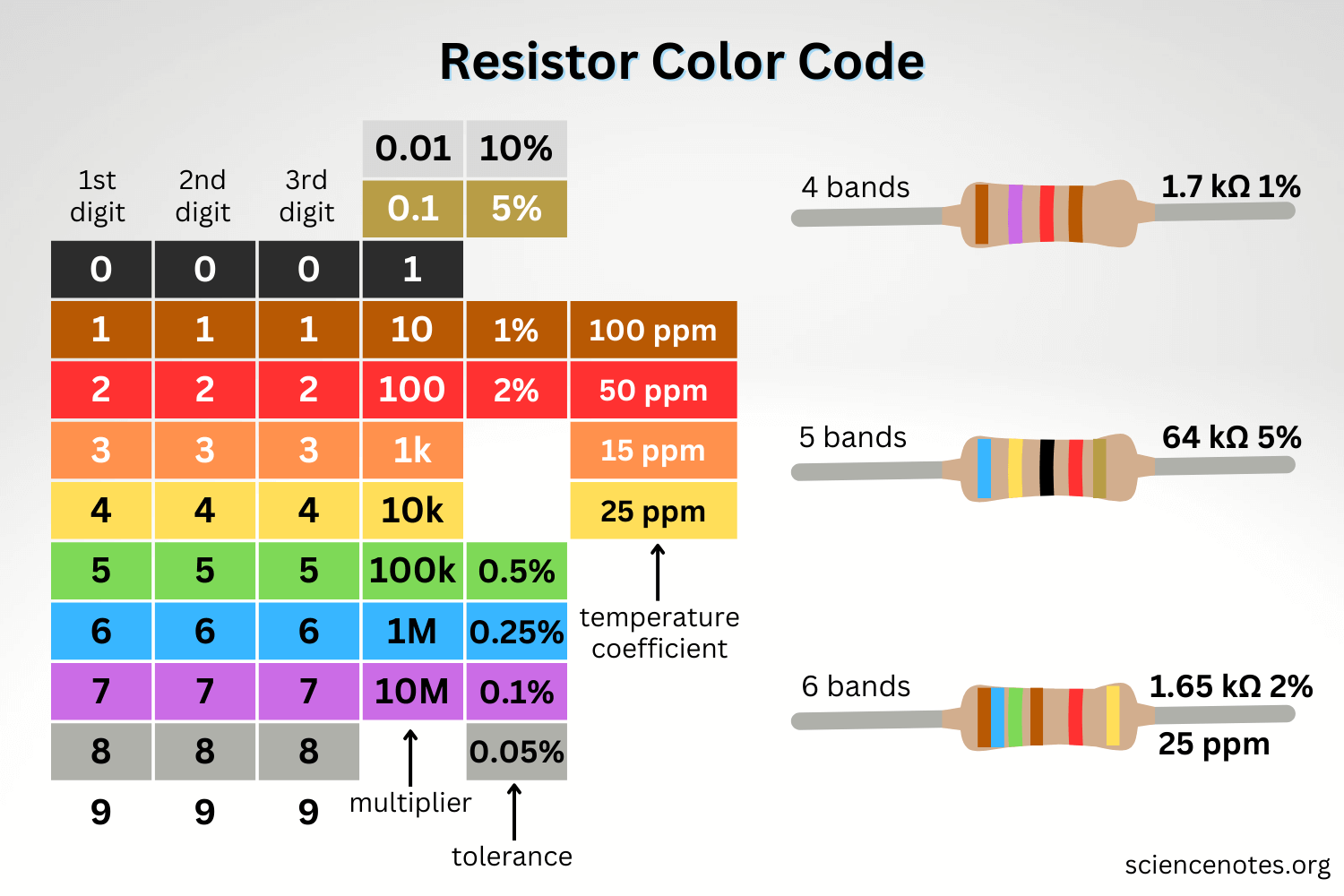
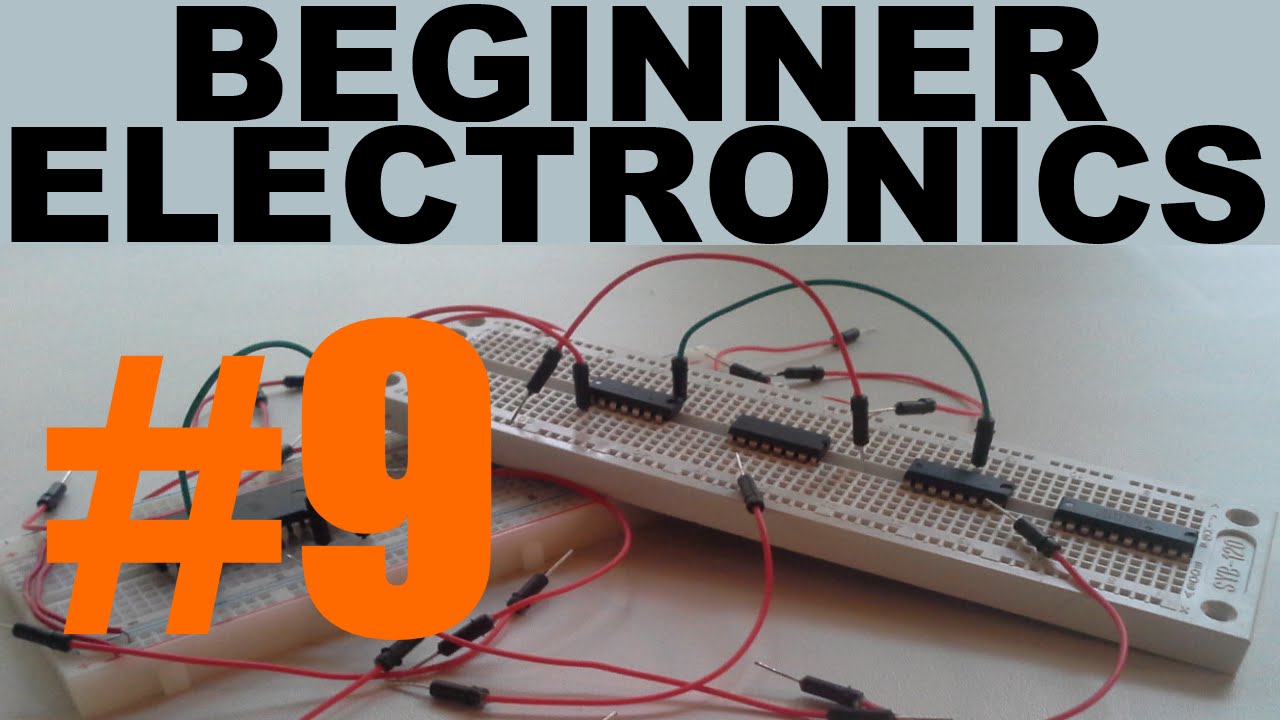
These resources introduced me to the Ohm’s Law formula (V = IR), and the Resistor Colour code, which I used to calculate appropriate resistor values to avoid burning out the LEDs.
These guides shaped my understanding of how electricity behaves in a physical system, making me more deliberate in my setups. I also started thinking about how this technical knowledge could intersect with interaction design theory. This was where I found out about Arduino's which I will look to investigate in coming weeks.
Looking ahead to Week 5, now that I have some basic experience in making a circuit I'd like to build on this experiment by making a functional electrical prototype. I'll do this through the electrical pencil sharpener I mentioned earlier as I think it's a basic enough electronic function, and is a model I can get done in the time frame while requiring some thoughtful problem-solving. My main goal I believe I can achieve in this experiment is creating a responsive element - something that changes the circuit's behaviour based on an external input. This could be a switch or maybe even having the sharpener start working automatically when the pencil is inside.
To continue improving my knowledge, I'll start looking at some content on arduino's which I am quite interested in. I'm hoping this will help spark some ideas on the next iterations on these experiments. I'll also seek some feedback from some of the Design Lab technicians, to fast track my electronics learning and hopefully better prepare for the coming weeks.
I’ll document each step through annotated photos, sketches, and possibly short screen recordings of simulations or real builds. This approach will help me build up toward more complex responsive prototypes with a stronger technical foundation.