Week 2 - Continue interest ideation, Connect mediums, Prepare Tech Demo
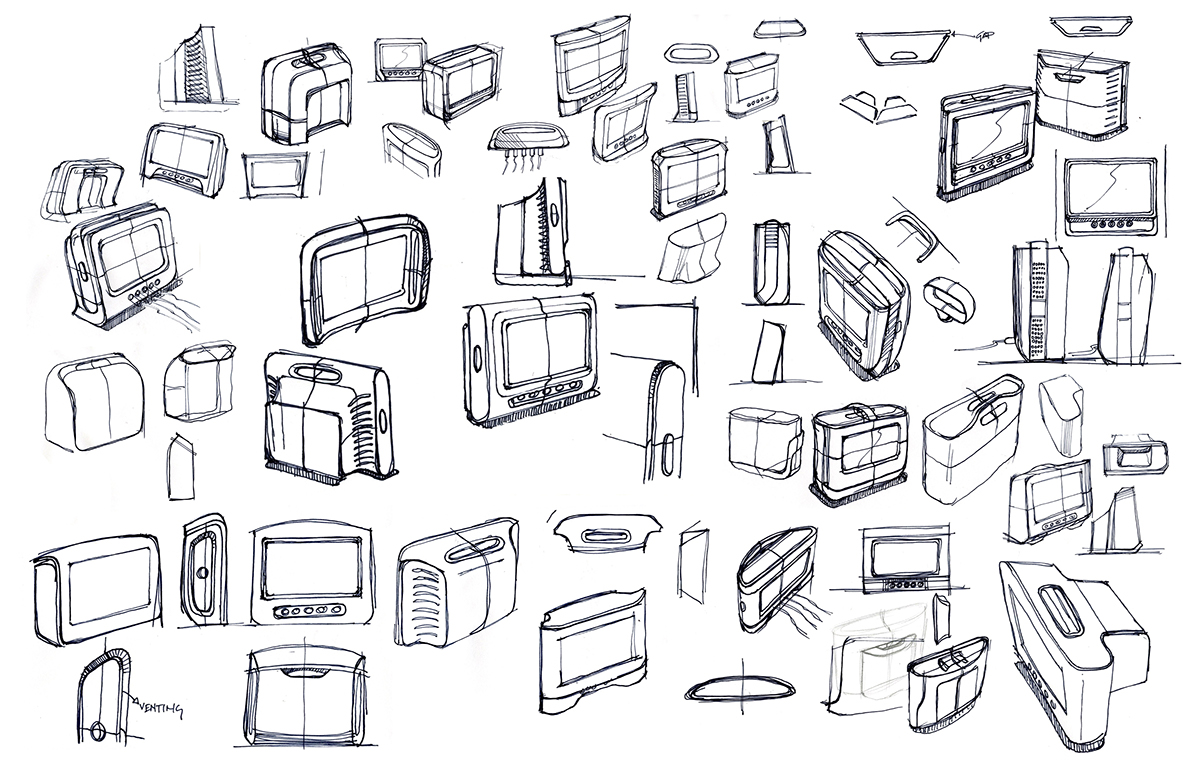
This week, I explored various ideas for my experiment, focusing on potential prototyping methods and material exploration. I began by brainstorming a number of different topics, skills and materials I could be interested in experimenting with while using the Ideation guide to start matching different mediums and inverting challenges to create a number of creative concepts. Regarding my tech demo I finalised my topic and began to look at different ways to approach rapid prototyping, considering low-cost, accessible materials like cardboard, foam, and 3D printing. My goal was to identify methods that could effectively test early design concepts while remaining flexible for quick iterations.
This week I undertook the ideation guide in order to generate, connect, and refine some experiment ideas. I will expand on some of these interests and skills from last week and turn them into potential issues that could be addressed. The following are some of the steps I followed in this process.
Start broad - listing personal interests, materials, and tools
Connecting Interests to Broader Domains
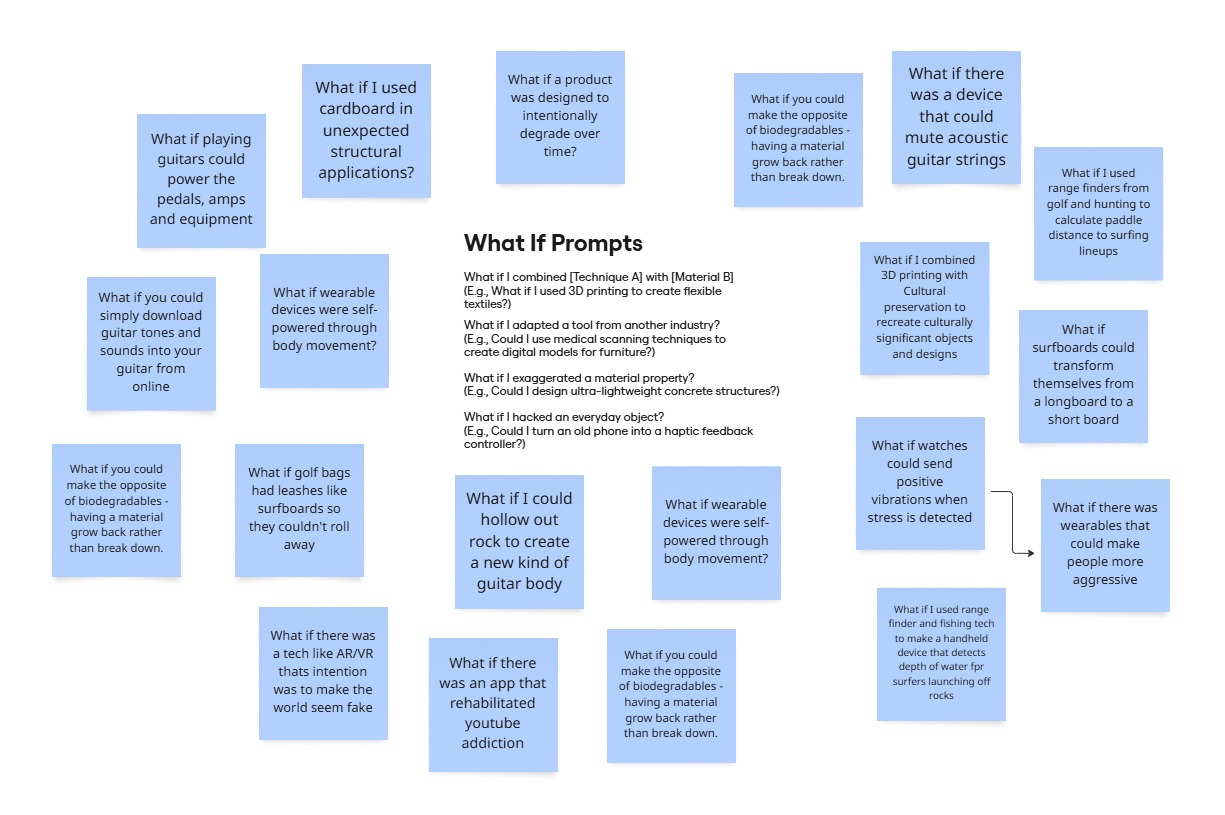
Generating What-If Prompts
Flipping Perspectives & Combining Ideas
Final Idea List
Starting Broad:
I began by listing my personal interests, mixing technical, cultural, and lifestyle-driven themes. This helped me identify potential starting points for exploration, from materials and tools I enjoy working with to broader social and environmental issues that resonate with me. I really tried to focus on quantity over quality. Rather than looking at tools and materials that I want to explore, I tried finding different random materials that were unique or that I hadn't heard of. This would allow me to have a large portfolio of materials to look through when it came to mixing and matching different experiment options or ideas.
.jpg)
.jpg)
Connecting Interests and Broader Domains
I then linked my personal interests and materials to larger design challenges and social movements. This step allowed me to frame my ideas in a more meaningful context - starting to ideate on how these interests could combine to form a concept.
Generating What-If Prompts
To expand my thinking, I wrote speculative "What if?" questions that challenged conventional design assumptions. These started to help with some more abstract concepts through restructuring typical thinking patterns.
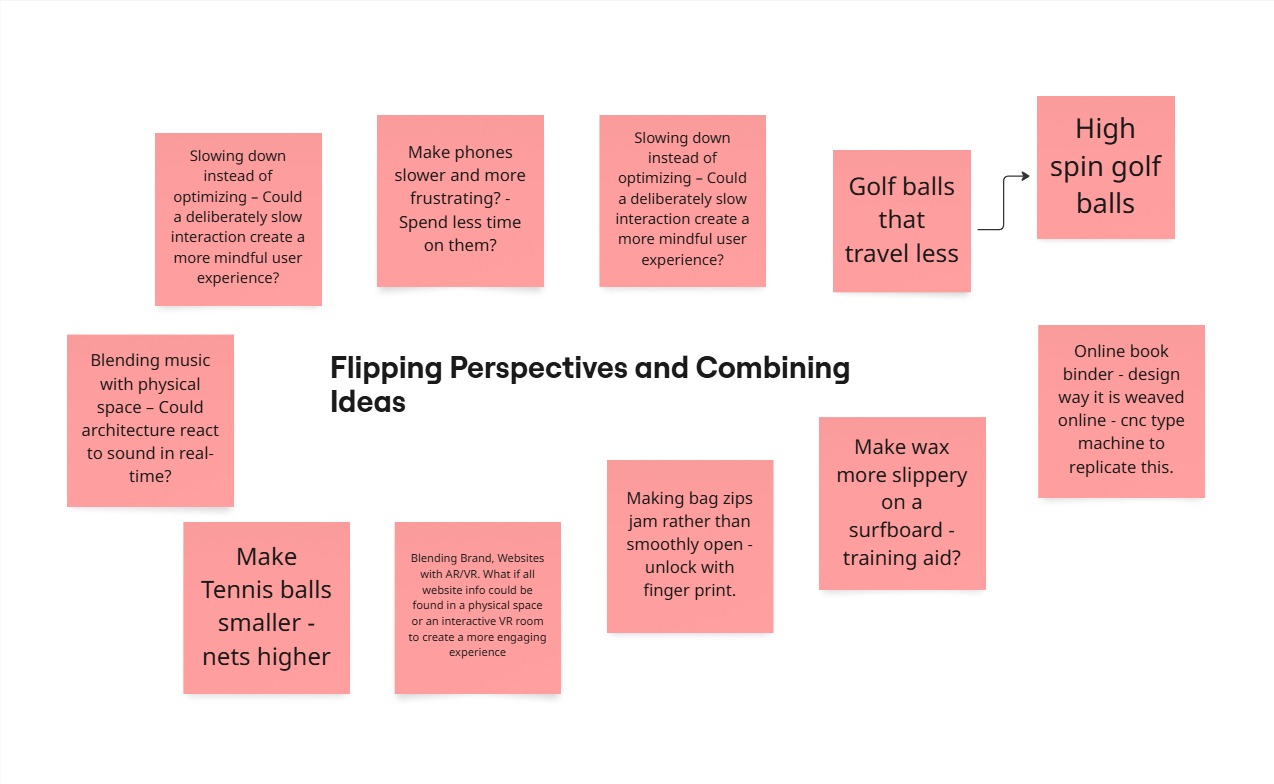
Flipping Perspectives
I then linked my personal interests and materials to larger design challenges and social movements. This step allowed me to frame my ideas in a more meaningful context - starting to ideate on how these interests could combine to form a concept.
As I considered different options for my tech demo, I noticed that all of my groupmates were focusing on digital technologies. To bring a different perspective, I decided to explore physical prototyping, specifically using cardboard techniques. This choice allows me to showcase hands-on making skills that are fundamental to rapid iteration and early-stage design exploration. By demonstrating how cardboard can be manipulated into functional prototypes, I aimed to highlight its versatility, accessibility, and relevance in product development.
I began outlining the key aspects of my tech demo, including the materials, techniques, and a hands-on activity to engage the audience. I have also started preparing a brief slideshow to introduce the purpose of prototyping, along with video examples of effective cardboard construction techniques. While I only have 15 minutes, I have planned a 5 minute interactive segment where participants will create a simple cardboard phone stand using the skills covered in the demo.
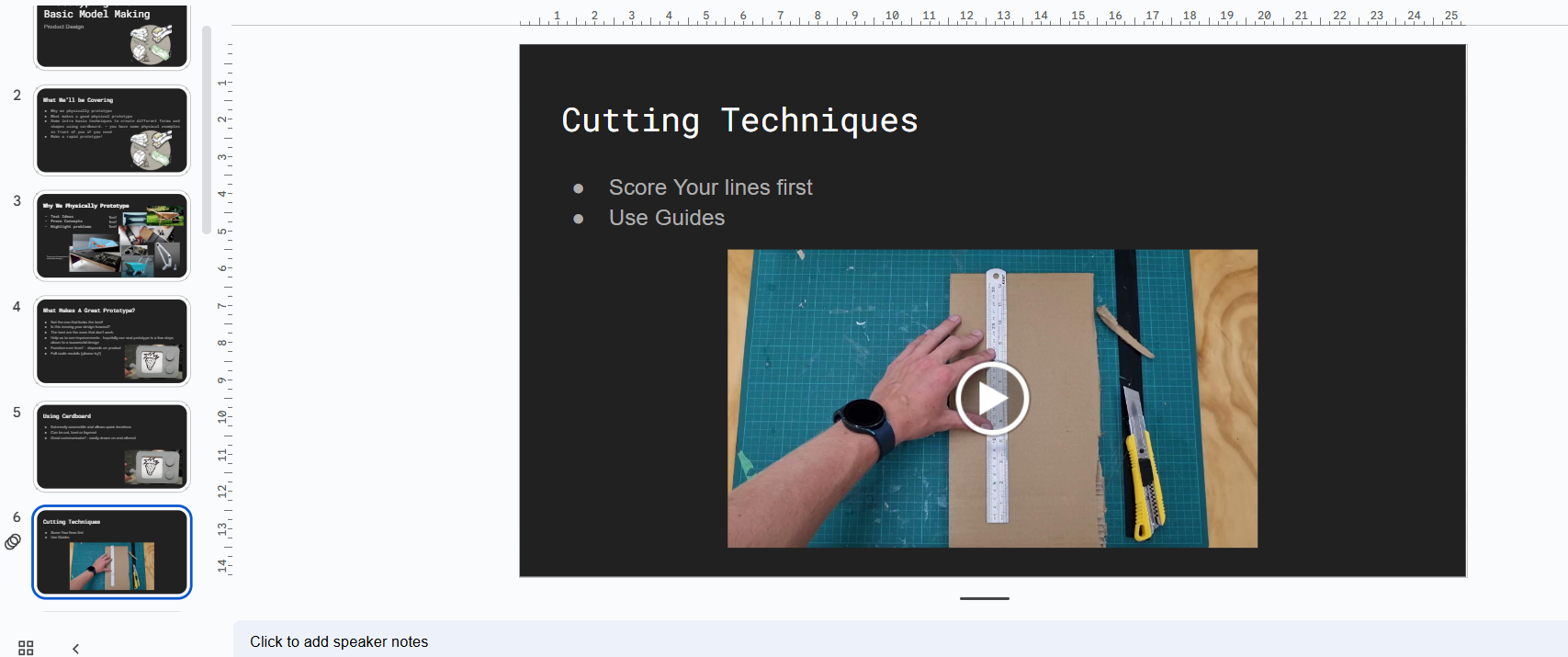
To ensure engagement, I am making sure I reference the tech demo prep guide, particularly focusing on trying to maximise participation while balancing information delivery with hands-on learning. I am also considering feedback strategies, such as providing live tips during the making process to help participants refine their work. Next, I will refine my presentation materials, test the activity to ensure it fits within the timeframe, and explore ways to keep the audience engaged beyond the demo.
Throughout this week’s ideation and tech demo planning, I felt both excited and slightly challenged. Exploring different experiment ideas helped me think creatively about how my interests connect to broader social movements and how these interests, materials, and movements can be combined to create eye-opening concepts. However, beginning to narrow down my ideas while ensuring they remained innovative and feasible was difficult. Deciding to focus on physical prototyping for my tech demo felt like the right choice, but I initially worried about whether it would be as useful and engaging as the more digital-focused demos my classmates were preparing. Once I started structuring the demo and testing the hands-on activity, I became more confident in its potential impact.
One of the most helpful aspects of this process was realising how structured ideation methods—like the “What if?” approach—helped me generate and refine ideas in a way that wasn’t overwhelming. The biggest challenge was balancing creativity and practicality; I didn't mind ideas that felt too ambitious for the scope of the project for creativity reasons, however I did have a few that felt too safe. The decision to demo cardboard prototyping techniques came from recognizing an opportunity to provide a different perspective within the class. While I believe this was a strong choice, I also recognized the need to ensure that my demo would be engaging and interactive to keep participants interested.
A key theme that emerged was the importance of iteration and hands-on engagement. The ideation process reinforced that ideas don’t have to be perfect immediately—they can evolve through experimentation and feedback. External perspectives also shaped my approach, as discussions with classmates helped me refine my tech demo structure and identify potential areas for improvement. Additionally, my background and preference for tangible, hands-on design influenced my decision to focus on physical prototyping rather than digital tools. Recognising this bias helped me be more intentional about ensuring my demo was relevant to a broad audience, including those more familiar with digital workflows.
This week’s work reinforced the importance of exploring, refining, and testing ideas before committing to a final direction. The ideation process pushed me to connect my personal interests with larger design challenges, while tech demo planning required me to consider audience engagement, clarity, and accessibility. Before the Demo on Thursday, I will ensure that it includes clear explanations, structured engagement, and opportunities for participants to experiment with the materials. Based on what I’ve learned, I will also explore ways to make the feedback process more interactive, perhaps by bringing physical examples of the cuts and holds for my groupmates to inspect, or a quick example at the start of the hands-on activity.
Finalise Tech demo - Refine the tech demo - specifically the interactive parts such as examples of the techniques and an activity.
Continue Experimental Ideation with focus - Ensure there is a focus in the ideation on going as crazy as possible - nothing is off the table. I can think about more feasible experiments next week.