Week 1 - Identifying Interests, Experiment Ideation, and Demo Ideas
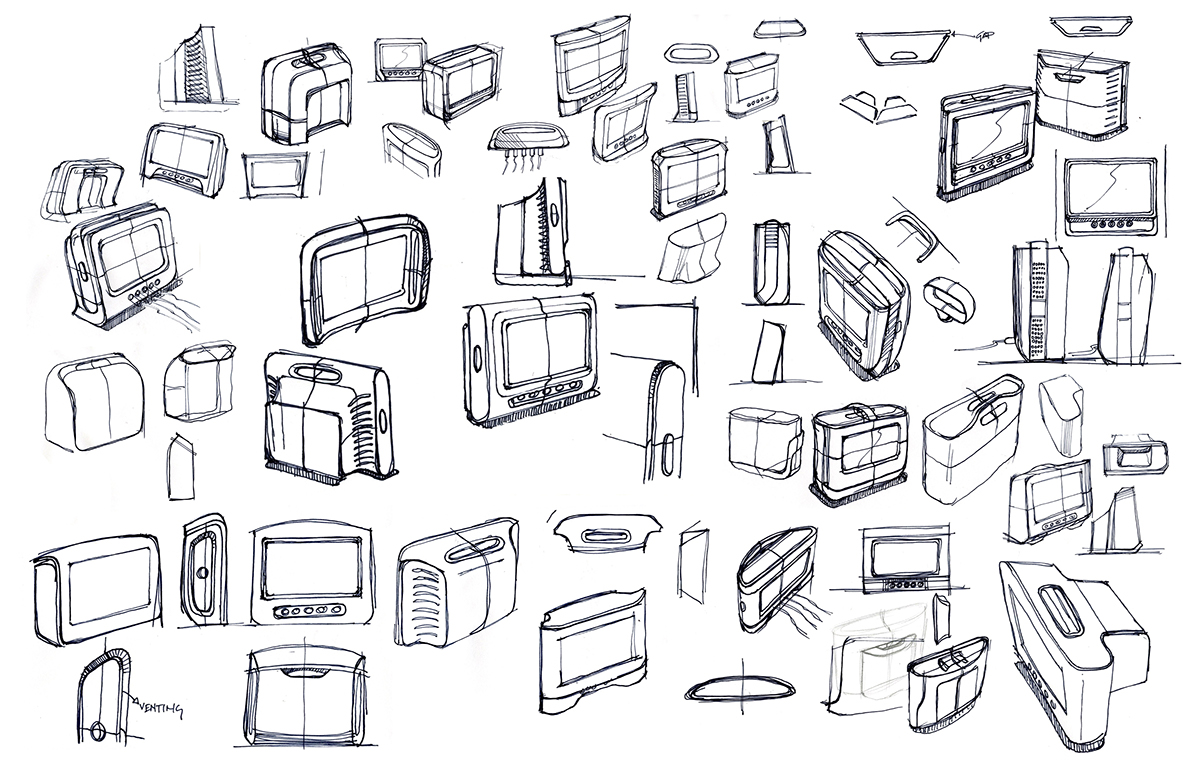
This week marks the beginning of my journey in DES 303, where we explore potential tech demos for our peers. The goal is to identify and develop a hands-on demonstration that leverages our skills while providing valuable learning experiences for others. Through collaboration, discussion, and ideation, my partner Raj and I examined our technical expertise, explored possible demo ideas, and considered how best to structure our presentation. This process allowed us to reflect on our strengths, explore new possibilities, and think critically about what knowledge we can share with the class. Below is a breakdown of our brainstorming session and a few of my reflections.
To start, Raj and I reflected on our existing knowledge and technical expertise. We also reflected on our values and interests. We discussed how our prior knowledge and experience could shape the type of tech demo we deliver. We were given some key questions that guided our discussion:
What technologies or crafts are you already skilled in?
What type of making do you feel most confident about?
Which of your skills would be most useful for your classmates?
How might this skill help them in future projects?
What specific aspect would you like to demonstrate and why?
How could you structure and deliver the demo?
Skills: I talked through my experience in 3D modeling (Fusion 360), app design (Figma), and woodworking. Raj suggested that many classmates already had some experience with Figma due to some of our past courses and that some form of woodworking or 3D modeling could help students who are looking to rapidly prototype physical products.
Values: We also looked at a number of core values in our design. I told Raj of my strong feelings toward human-centered approaches in my processes. Raj also mentioned creativity and integrity which we both agreed on.
Societal Concerns: We also began looking at some societal concerns we felt strongly about that could drive our capstone project. Some I felt more strongly about were cultural equality, Ocean pollution, and mental health. Raj also added unemployment and healthcare affordability to the conversation.
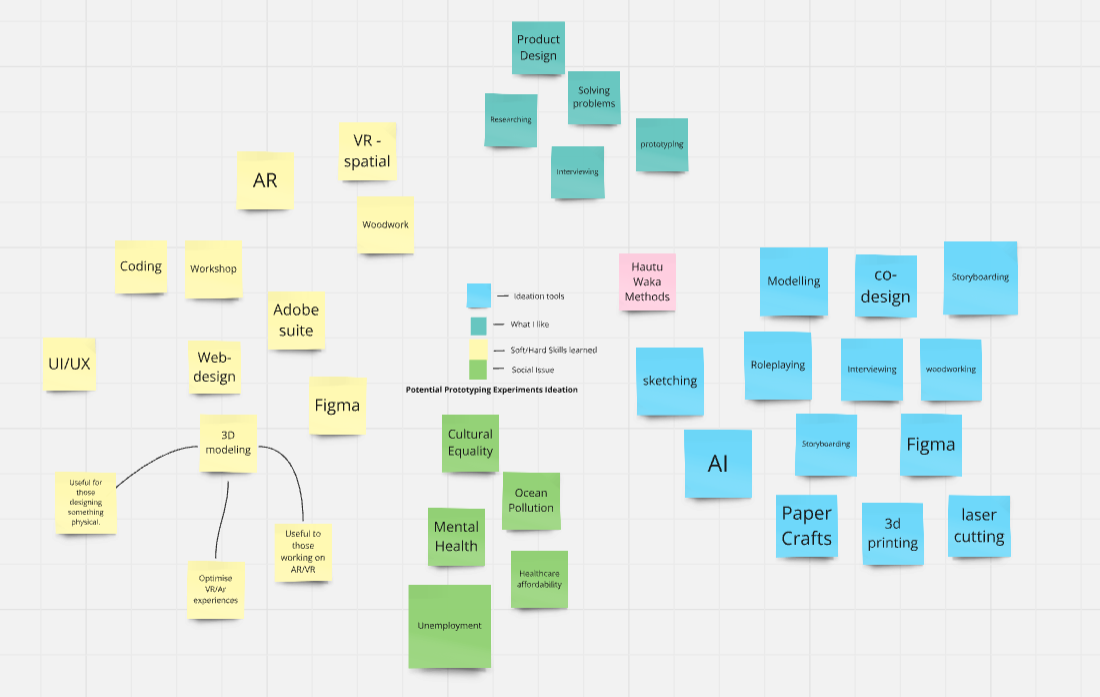
Based on my initial ideation into my skills and interests I decided to begin further ideating some specific Demo Ideas that may be of use to my classmates. For now I wanted to broadly look at one or two basic skills used in the technology I could focus on that may help my group members while also clearly covering how the technology could be of use to them if they do choose to use it.
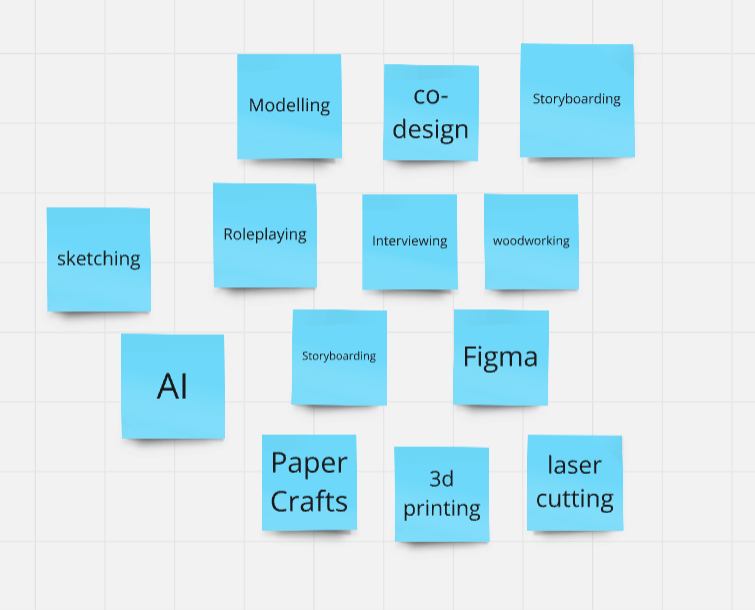
Rapid Prototyping with 3D models in Fusion 360
Create simple shapes and learn simple Fusion commands to quickly create 3D models of your Designs.
Woodworking
How to create some simple structures using machine tools, and methods to bind and hold these structures.
Storyboarding
How to effectively storyboard user experiences. Would be extremely useful to anyone looking to make apps, or designs where human interaction is at the forefront.
AI
How we can use prompts to utilise AI to ideate for us - use as a tool to get our minds going.
Sketching
How to sketch designs or ideas that communicate effectively without taking much time or effort.
Reflecting on this week’s activities, I felt excited about the possibilities but also slightly overwhelmed by the range of ideas we explored. I was confident in my 3D modeling skills, but someone in my group mentioned they were going to cover modeling in Blender. When I voiced this with Raj we came to an agreement that it may be more useful to everyone (even myself) to maybe cover something slightly different, even if it means teaching something I'm not fully confident with. Even though it may be a bit more work, it would allow me to teach myself a new skill while broadening the different methods taught in our group demos.
What Went Well?
Identified key strengths and how they might benefit others.
Explored a number of technical ideas balancing both impact and feasibility.
Collaborated well to refine concepts and how they could be structured.
Challenges and how they were addressed
Making complex technologies accessible - ensuring the demo serves as a good introduction that my classmates can work from.
Narrowing ideas to ones that could be solved in the 10-15 minute time frame.
An analysis of the exercises carried out through the week.
Why was brainstorming effective? It helped us consider different perspectives and anticipate challenges our peers might face.
What could have been improved? I could have more rapidly come up with some of these ideas if I had prioritised quantity over quality - it could have allowed me to plan how a demo of each idea could look.
What does this tell me about my learning process? I tend to overcomplicate initial ideas rather than getting pen on paper - this will allow the prototyping experience to be more effective and rewarding.
This week introduced our first looks at ideating different prototyping methods. I was able to gain a clearer understanding of how my skills can contribute to a useful tech demo, and also some first insights into what values and issues speak to me and potentially could be incorporated into my capstone project. Looking ahead, I will expand some of these interests and skills to turn them into potential issues that could be addressed and how. While doing this, I will ensure I focus on simplifying concepts and getting them out there so that I can try to maximise that output in this ideating phase.