THE GOLF RACK
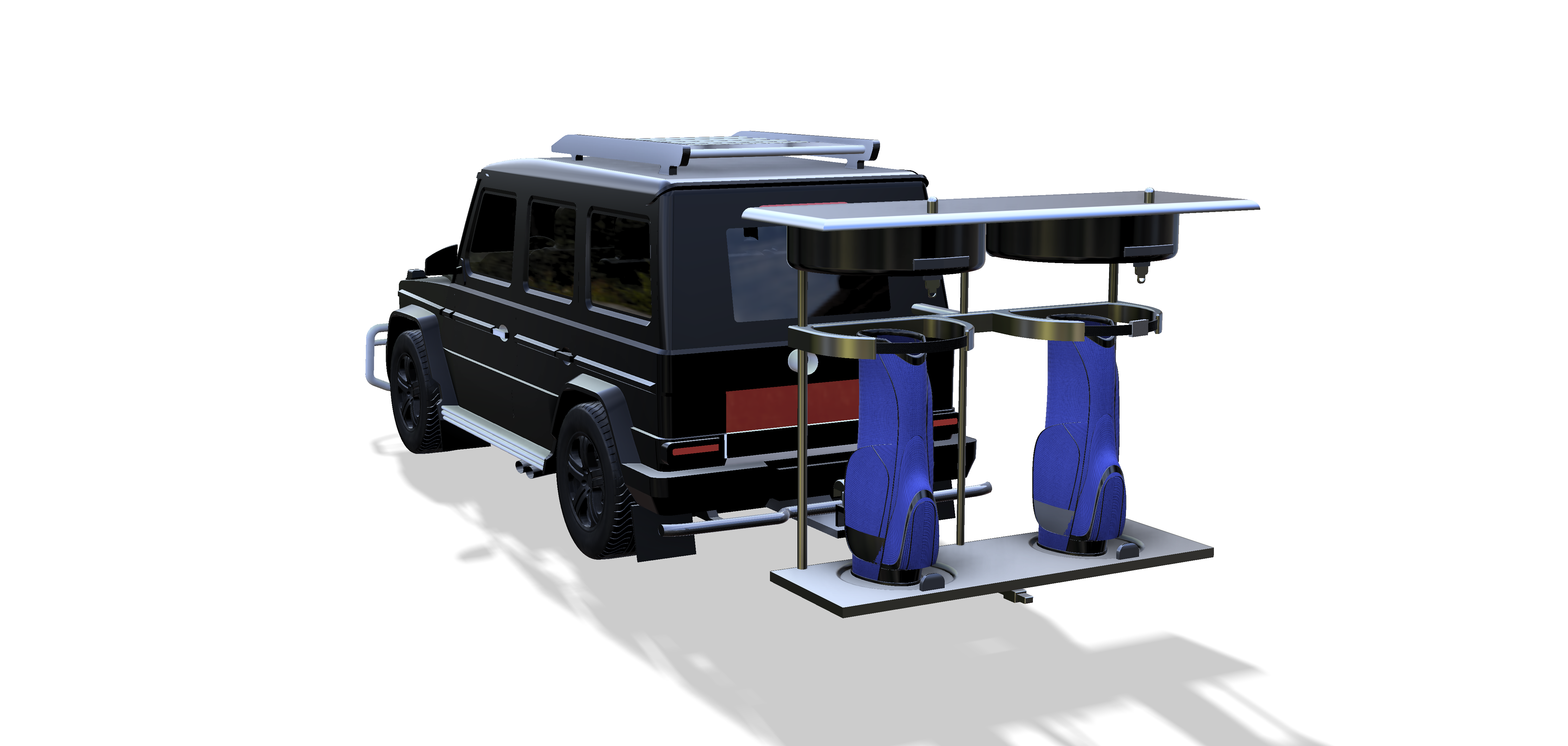
On rural golf trips, golfers often sacrifice comfort and space in their cars, all because bulky golf bags take up almost half of their vehicle’s boot. With the massive rise in golf since the COVID pandemic, this issue has affected thousands of golfers every year, forcing them to leave behind luggage or even reduce the number of passengers, leading to unnecessary stress and logistical challenges. Without a better solution, golfers will continue to face cramped and uncomfortable trips, diminishing the enjoyment of group golf outings and adding unnecessary planning difficulties.
The problem persists because golf bags are large, awkward to pack, and most cars aren’t designed to accommodate multiple sets without compromising space and damaging clubs. This is especially true for compact and mid-sized vehicles, where boot space is at a premium. As golf continues its rapid rise across the globe, and more people choose to travel in groups for social and environmental reasons, this issue only gets worse, limiting how many friends can join in the fun or making it difficult to pack for overnight stays.
This golf rack solves the problem by mounting the bags on the outside of the car. This frees up valuable interior space, allowing golfers to travel with all the luggage they need and still fit everyone comfortably in one vehicle. The rack also protects golf bags from the weather and road conditions, providing peace of mind on long journeys. With this design, golfers can travel worry-free, enjoy more space, and focus on the game and enjoying the trip with all of their friends.
The long-term impact of this solution is clear: fewer cars on the road for group golf trips means less fuel consumption and a smaller environmental footprint. It also makes rural golf tourism more accessible, encouraging golfers to explore new courses without the worry of limited space and with all of their friends. Ultimately, this simple yet effective design will transform the way golfers experience their trips, making group outings smoother, more enjoyable, and environmentally friendly.

My goal was to design something to enhance the social experience of golf. Through the use of human-centered design, I've created a product that at its heart looks to better foster connection among players, maximize shared travel convenience, and accommodate the growing trend of golf as a social sport.
.png)
As a young golfer who picked up the sport through university, I’ve experienced firsthand how golf can create deep friendships and provide a unique connection to nature, offering a much-needed escape for mental well-being. Taking up the sport with friends during a challenging time has shown me the transformative power of shared experiences and the calming presence of the natural environment. This journey has shaped my perspective, fueling my passion for promoting golf not just as a game, but as a tool for building community, enhancing mental health, and reconnecting with the outdoors. Throughout this process, I will be utilising Tikanga such as Whanaungatanga and Kotahitanga to ensure I keep my target users at the projects heart. This will allow me to design WITH my target users to produce the most meaningful output.
At the start of this project, I was determined and excited to improve some aspect of the usual weekend golf round. I spent several weeks observing golfers—studying their habits, how they navigated the course, and the frustrations they encountered—hoping to uncover that elusive "aha" moment.
My initial ideas ranged from new ways to repair divots to apps that could help beginner golfers more easily access clubs. However, I quickly realized the overwhelming scale of the golf product market. Almost everything I created was already out there whether it be in local stores or social media platforms.
Feeling pretty deflated after a string of dead ends, I decided to take a break. During the mid-semester break, my friends and I planned a golf trip. That morning, as we packed essentials into the back of my relatively large Subaru Tribeca, we quickly realized there was no way we could fit our golf clubs along with our luggage.
The situation forced us to split into two cars, missing out on the buzz of traveling together. To make matters worse, we had to remove drivers, 3-woods, and other long clubs from our bags to avoid damage from shifting luggage—a risky move for students on tight budgets who can't afford costly replacements.
It turned out I wasn’t alone in facing this problem. After a few hours of searching online groups and forums, it became clear that golfers worldwide were struggling to find effective solutions for transporting their clubs. While some attempted to stuff their clubs into exterior containers, these have been pretty widely advised against, as the heat inside can melt the epoxy holding clubs together, especially on hot days. Surprisingly, a product specifically designed for this need simply didn’t exist.
The first step to approaching this issue required an understanding from a range of individuals. I interviewed 4 golfers from different backgrounds and levels, and each one mentioned different underlying problems when it came to storing clubs. Sarah, an older weekend player, struggled to store both her clubs and her kids’ gear in her family SUV. Liam, a young avid traveler, found it impractical to pack his own clubs on longer trips, often resorting to renting, or only taking a couple of clubs when storage space fell short. Emily, a uni student that golfs with her friends, was frustrated by the need for multiple vehicles on group trips because she spends so much on gas, and can't spend the journey together. Meanwhile, Mike, who recently bought some expensive new gear, mentioned he couldn't trust exterior cargo carriers due to his worry of clubs getting damaged when potholes or bumps were hit.

"When I'm on long trips my golf bag is a pain to fit in, so I usually just rent some clubs if I end up wanting to play on the way."
"It’s always a struggle to fit both the clubs and the luggage… someone always ends up leaving something behind."

"The clubs get banged up in the trunk if they’re not secured properly, so I usually have to tie them up in the back, because replacing my clubs will be way too expensive."
"I hate having to take multiple cars. It takes the fun out of traveling as a group, and we waste so much gas!"
This created some crucial insights:

Golfers view security and safety of their clubs as a crucial aspect when transporting their equipment.

Existing storage solutions are either inconvenient, unsuitable for golf clubs, or cause concerns that could damage equipment.

Many Golfers highly value the enjoyment of traveling as a group.
In order to define exactly what my product should achieve, I had to clearly specify a single problem. Based on my interviews, I decided to primarily focus on one one persona I created named Jacob, based on a problem that came up often. This was his problem statement:
Jacob and his friends are university students who love going on golf trips during their breaks. At times, they often struggle to fit their golf bags and luggage, forcing them to take separate cars or leave essentials behind. As students on tight budgets, they want a cost-effective solution that lets them travel together while protecting their clubs effectively.
This is a problem that not only improves the overall experience of a golf trip (especially for uni students with tight budgets and limited resources), but promotes general greener habits which has always lacked within the golf industry.
There are no entirely direct competitors in this field aside from large fibreglass containers that as outlined earlier, golfers found both too expensive and risky for their golf bag. So I decided to learn from similar spaces in the bike and surfboard rack experience. I interviewed 2 bikers and surfers around their experiences with storing their equipment in their car. Focusing on their experiences around ease of use, and practicality I noted some key points. Both surfers and one of the bikers noted they disliked storing their equipment on the outside of the vehicles as using down straps, and bungy chords were both tedious and inefficient. While one of the bikers didn't like newer technology and prefered a simple bike rack and bungy chords as it gave him peace of mind that his equipment was safe.
Due to the time constraint for this project I limited the initial scope for this project to an exterior car attachment designed for golf clubs. I have aimed to make initial digital prototypes as realistic as possible, and will make full size physical prototypes to ensure the different elements of the structure are efficient and practical. In doing this it ensures that the product produced will meet potential business needs as well as the needs of the user.
I began iterating ideas for a golf rack by asking:
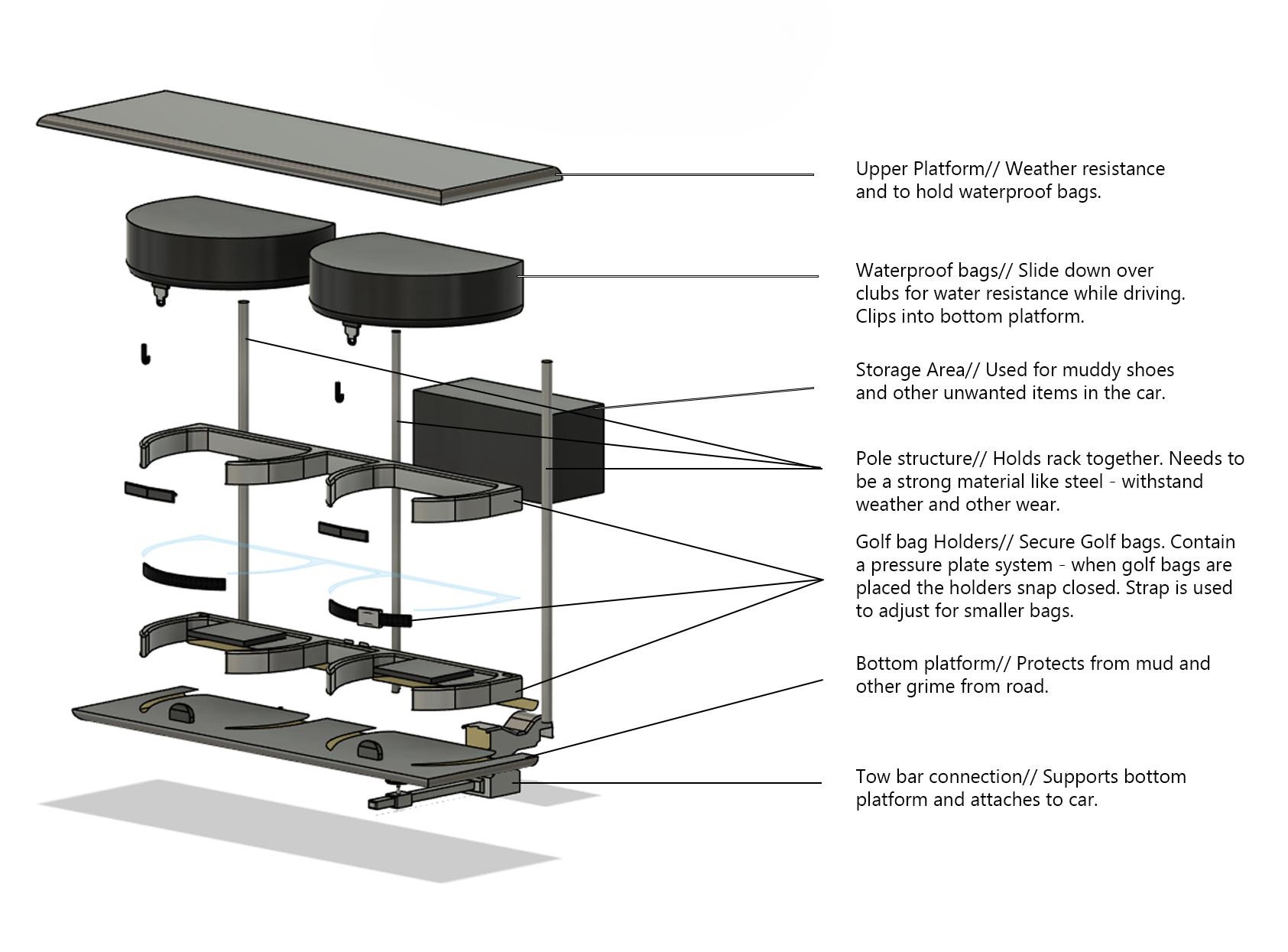
Basic golf club carrier that attaches to towbar. Pressure plate system as seen at the bottom snaps the rounded holders closed when bag is placed on top. Roof protects from weather, and potential shoe compartment to be added so dirty shoes aren't in the car? Super easy to put on and off - clubs are secured and won't be damaged from bumps and potholes rattling around.
.png)
.png)
Second iteration adds a bottom platform protecting from any mud and grime from the road. It also contains Waterproof bags that are attached at the top and can be easily dragged down over clubs and clipped in when in use to protect from weather. They can be stored at the top by putting the handles attached on hooks when not in use as seen at the top. This holds the waterproof bags up when not in use.
Clipping system added for the waterproof bags. So they are dragged down by the handles before being clipped in to the inserts seen on the bottom platform.
.png)
.png)
Accessory holder could be placed at the back if needed. Put muddy items like shoes, balls, and other things here to avoid mud from getting inside the car. To be zipped up (made out of a soft material)?
Here I have added straps to the upper holders that could be used to secure the bags and lock them in. This way you can leave your car with your bags safe which was a common request during interviews around an exterior carrier. Here using straps made of a strong material similar to that of a bike lock could be useful. Could use either a code or key sytem.
.png)
.png)
Square lock could be placed on both holders in order to secure the bag when leaving the car. A four digit pin could be used to unlock it.
This was a great foundation I felt I could get some feedback on. My lecturer recommended from here I begin creating some physical prototypes to better iterate the design to find what really worked.
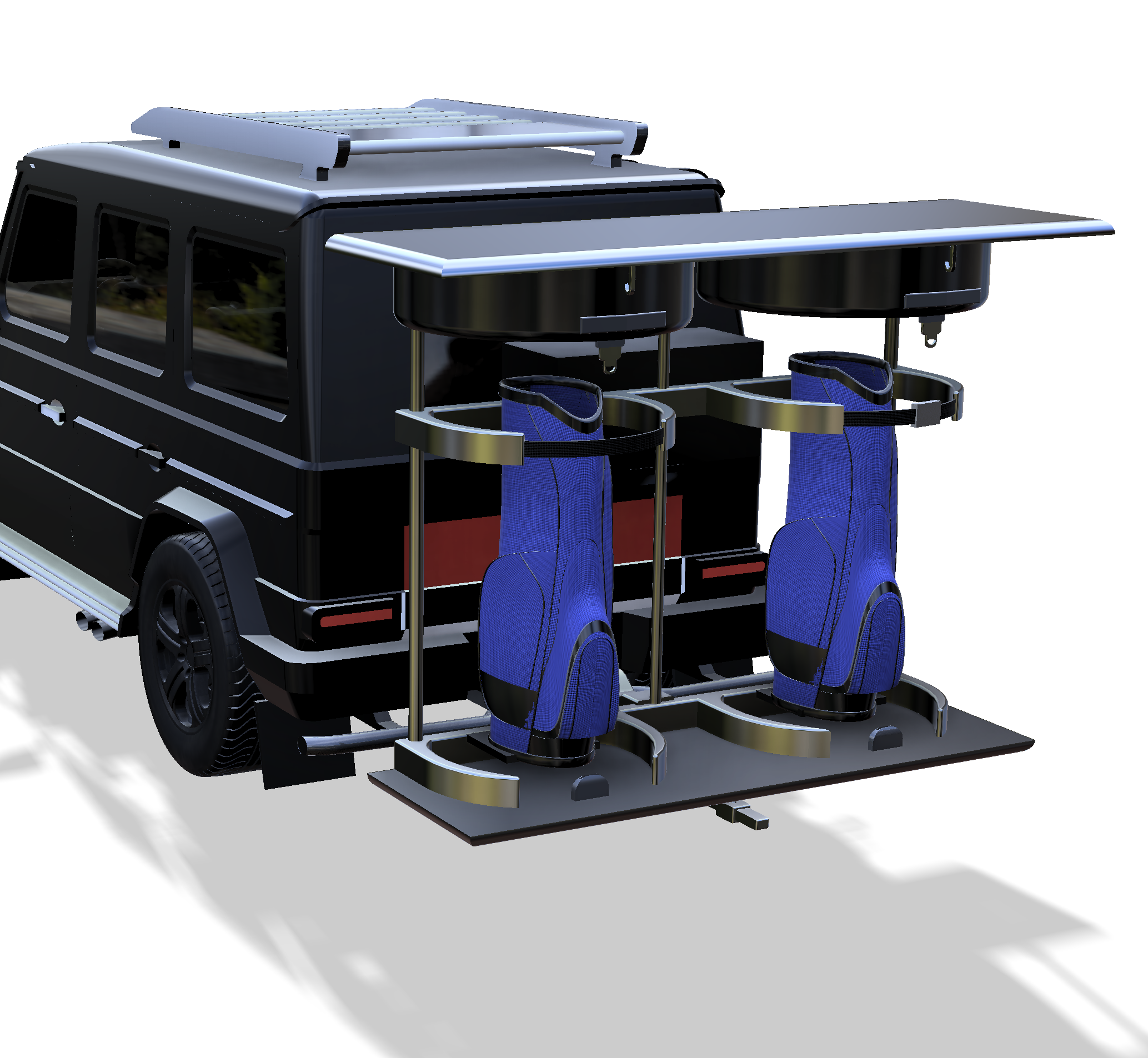
These were some of the final 3D renders before I began my prototyping phase:
.png)
.png)
.png)
.png)
This final 3D model is now ready to be transitioned into a full scale physical prototype. The overall goal of this stage is to get it in the hands of potential users. I hope to see how a golf bag may sit within the rack and observe how easy or difficult users found setting it up. I created a rack for a single golf bag to test this first in order to utilise the limited time I have.
.png)
.png)
.png)
.png)
Following the first stages of creating this full size physical model I noticed a number of flaws in the design straight away. I immediately couldn't see a need for the lower holder as it provided very little support to the bag, and the overall rack I believed needed more upright support so that it was more stable throughout.
.png)
.png)
.png)
.png)
Through the continuation of the physical prototype I brainstormed different ways the waterproof bags could work, and what the bags could slot into on the bottom platform rather than using lower holders. I also created more support to the back of the holder, as the previous design was not stable enough to hold the full frame upright with bags in the rack.
.png)
.png)
.png)
.png)
.png)
.png)
.png)
.png)
.png)
At this stage, I decided to conduct user testing by letting golfers try out the rack while I observed. It quickly became apparent that the upper holders were too long, making it difficult and awkward for users to place their bags inside. To address this, I plan to shorten the solid holder and use adjustable straps as the primary support for the golf bags. Additionally, the waterproof bag system proved problematic, as pulling the bag upwards to remove clubs became messy and uncomfortable. Another issue was the size of the rack when holding the golf bags upright—it was too large and would be difficult to store unless it could be easily collapsed or broken down. In the next physical iteration, I will focus on resolving these issues, with a particular emphasis on reducing the size and improving ease of use.
.png)
.png)
.png)
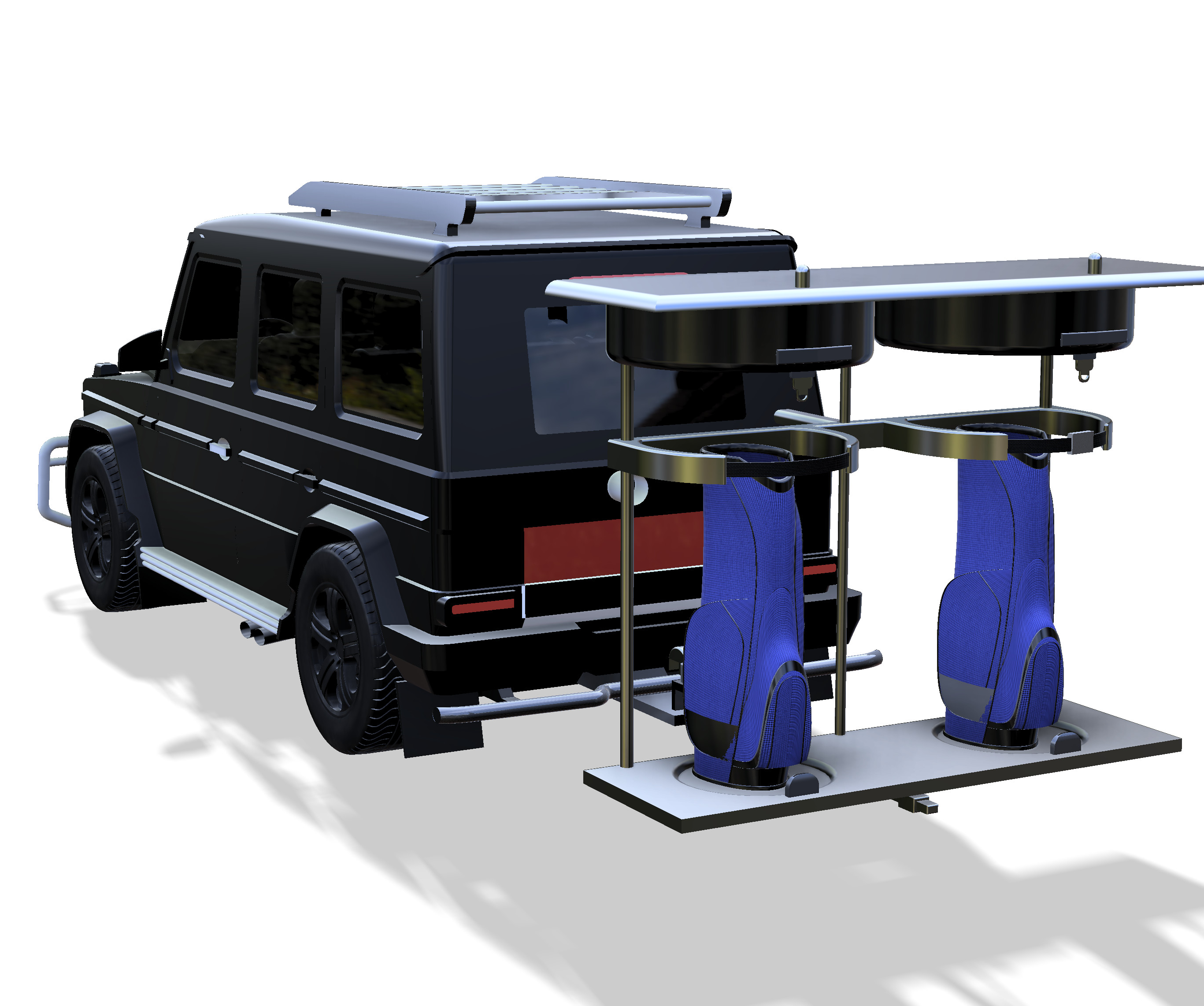
There will be many improvements to make, however with my limited time frame for this project, I was happy with what I had created as a first iteration. The prototype was securing the bags nicely, with shorter holders the golfers were getting their golf bag in and out of the rack with ease, and most importantly many mentioned that they would definitely use a rack like this with friends to get their clubs to the course which meets the original problem statement:
Jacob and his friends are university students who love going on golf trips during their breaks. At times, they often struggle to fit their golf bags and luggage, forcing them to take separate cars or leave essentials behind. As students on tight budgets, they want a cost-effective solution that lets them travel together while protecting their clubs effectively.
The persona's problem is being solved - Jacob has a way he can free up two bags worth of space in his car, while protecting his clubs and securing them when the car is left alone. However future iterations will look at how I may make the rack smaller and storable, potentially fit more bags, and a more cost effective and efficient way to keep the bags weather proof.
New iterations coming soon...
.png)
.png)